What Can Morning Pages Do For You?

It’s been 18 years since the original release of Julia Cameron’s book, The Artist’s Way (“TAW”), a Spiritual Path to Higher Creativity and a Course in Discovering and Recovering Your Creative Self. Every time I work through this 12 week course good things happen. I’m working on my fifth pass.

Two keystones of The Artist’s Way are the morning pages and the artist’s date. The morning pages are three pages of stream of consciousness writing done daily, upon waking is Cameron’s recommendation. The artist’s date is a exactly that, a date with yourself, where you take yourself out to do something that interests you.

I can’t say what the morning pages discipline will do for you but I can tell you that the first time I went through the book, I decided to propose a course to a local university’s evening extension program and they liked my idea and it was in the next class catalog. I was contacted by the local major newspaper and wrote a feature article for them about my topic, which was how to write love letters.

Here’s Julia Cameron discussing morning pages.

2 Reasons I Like PowerPoint

There are ways to maximize this wonderful tool and all kinds of tips are available (see http://www.thinkoutsidetheslide.com/newsletter.htm) on how to avoid “death by PowerPoint.”

Two reasons I like PPT:

1. It’s easy to learn. I learned to use it in less than an hour, it’s so user-friendly tool.
2. It is a versatile tool to express your ideas. Isn’t it a whole lot more convenient than carrying around a carousel of slides?

There’s a terrific blog, in fact, for how to be more creative with powerpoint. See http://pptblog.tlccreative.com/
What are some reasons you like PowerPoint?
4 Easy Principles for the Non-Designer Designing

Are you working on designing a web page or a brochure and could use some tips? Applying the four basic principles outlined in Robin Williams’ book of The Non-Designer’s Design Book can help with the overall look of your project.

Williams’ four basic principles are:

Contrast: if elements are not the same, make them very different. Elements meaning font, color, size, line thickness, shape, space, etc.).

Repetition: repeat visual elements throughout the piece. That means repeat color or size, shape or other elements. This will strengthen the unity of it.

Alignment: every item should visually connect with another item on the page.

Proxmity: group related items near each other

So there we have it, an acronym that is easy to remember. In case you want to order the book, here’s a link: http://www.amazon.com/Non-Designers-Design-Book-Robin-Williams/dp/0321534042/ref=sr_1_1?s=books&ie=UTF8&qid=1289591041&sr=1-1

The Value of Oh!

Oh!
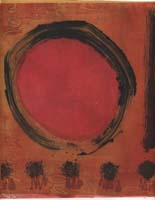
Monotype by Mary Gow

Though the shape I most identify with is the spiral, here’s a circle I wanted to share with you. It’s a monotype. In case you don’t already know what a monotype is, it is a one-of-a-kind print made by painting on a piece of glass which is then placed on the printing press. Paper is then placed over the plate and the press is rolled over it.

Now about “oh”! I remember my dear sister shared with me one of the secrets to a happy relationship. She said not to underestimate the value of replying with “oh,” when something the other person says happens to surprise you (perhaps negatively) and you want to say something affirmative. She went on to say “oh” about ten times with varied intonations.