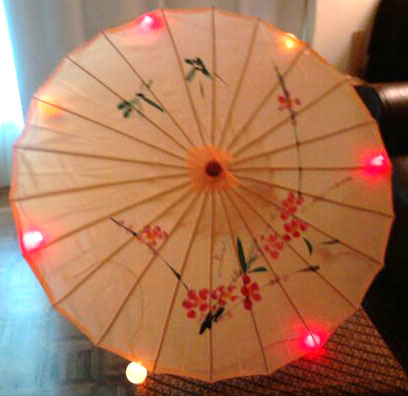
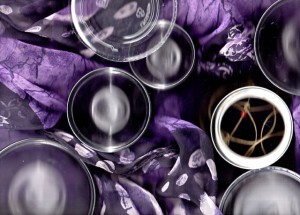
Introducing the Lumbrella! The Lumbrella is a Rolf van Widenfelt creation. The parts come in a kit that may be assembled on your own or in a class taught by van Widenfelt. Unless you already have a soldering setup you may want to take the class. You’ll learn how to solder LED lights to a cord and add on a control switch with an on/off button. The soft light look is achieved with ping pong balls. The lights are then attached to your umbrella of choice. You’re bound to get noticed on a rainy day! Want to find out more about how to make your own Lumbrella?
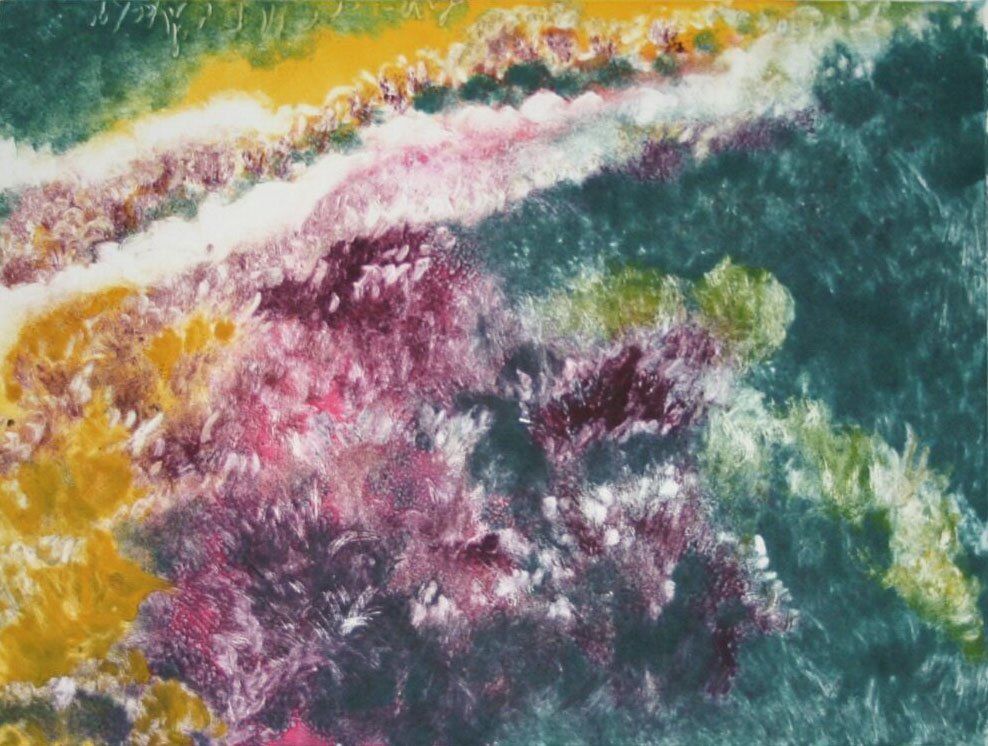
Monotype by Mary GowIs having a website one of those essential things an artist needs in order to make a living as an artist? Sculpture Thomas Hill doesn’t rank it as the top five most essential things. However, it doesn’t mean their work cannot be seen on the web.
Recently I heard Hill speak on a panel of five artists speaking on the topic of making a living as an artist. (In an earlier post I had mentioned my favorite top five tips I garnered from the 25 shared). How do you find Hill on the web? Google him. He says he’s doing fine without a site.
Unlike some members of the panel, Hill advocates not thinking of the commercial application of your work – rather more important is the pursuit of whatever you are passionate about. Don’t think about whether something will sell, think about what makes you happy to create.
There’s roughly four branches for an artist to sell through:
1) commercial gallery shows;
2) craft shows (Hill says it’s one of the best ways to get out there because you’re in direct contact with potential buyers);
3) public and corporate commissions; and
4) museum shows.
Hill reemphasizes that it’s more important to find your artist’s voice than to think about selling.
His five tips for making a living as an artist:
1) Make a LOT of work;
2) Make things you care about that mean a lot to you;
3) Don’t be afraid to ask advice (he was in a critique group and many members were 15 years ahead of him
and he got excellent advice from them);
4) Be friendly with colleagues, suppliers, etc.; and
5) Have good images. For example if a publication calls and asks you for images of your work, you already have a stable of them ready to be published.
Maybe an artist doesn’t need a website so much as she needs to be happy and producing work and lots of it. Then, the World just might find you. Of course it doesn’t hurt to have helpful members of your critique group give you a heads up.
Recently I heard a panel of five artists each share five tips on making a living as an artist. Here’s my distillation, my favorite five after going over 25:
1) Realize you are a brand and people buy into how you present yourself.
2) Making art is a daily practice so always be making something. Especially something that means a lot to you.
3) Don’t get discouraged by the noes. You’ll learn from each one.
4) Have integrity. This is perhaps the most important quality.
5) Find your place, your voice. Don’t even think about the “Art World” when you make your art.
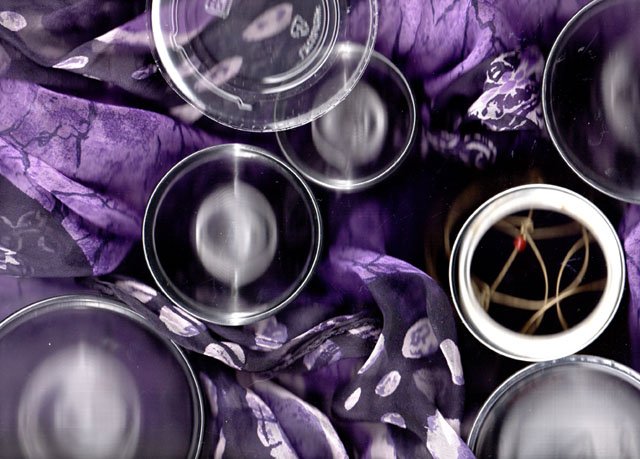
Gow-O-Gram by Mary Gow Photograms are one of my favorite art forms. They are cameraless photographs often produced by placing objects on top of photo-sensitive paper and flashing them with light under the photo enlarger in the darkroom. I once saw images of objects scanned and decided that might be a way to shortcut going to the darkroom. Here’s the result of my first experiment on my scanner. Making art from your image scanner has been around for as long as the scanner has been around. What have you been scanning?