
5 Resources for Selling Your Art Online

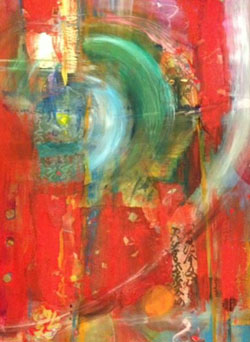
Emerging, Mixed Media on Canvas, by Mary Gow
"Emerging," mixed media by Mary Gow
Though the purpose of my blog is to speak to the artist in you and not specifically to artists who use brushes and paint, this post and the previous one are more geared for the active visual artist.

Were you inspired by Abbey Ryan and Natasha Wescoat who are making a living producing their art on their own terms?

From my research on ways to sell art outside the gallery environment, I found five helpful resources worth sharing. At the end I’ll tell you what my choices are.

1-Empty Easel offers a hefty amount of information for setting up for artistic success. Found this advice for selling your art online.

2- The Abundant Artist has a fantastic affirmative name and there I found 15 Ways to Sell Your Art Online.

3-Artonomy provides a healthy list of resources for selling or promoting your art. As an aside, don’t miss the list of free creative tools for editing your images online.

4-Fidelis Art Prints has some wisdom to share advising you “make your online reproductions a little smaller and slightly different than the original. Doing this would preserve the value of the original. Don’t miss Fidelis’ helpful article on seven features that help you market your art on Facebook.

5-Why not take the entire sales process into your own hands and pitch anything from your own Facebook page with PayPal button? You take care of the artwork preparation, shipping and handling yourself.

After visiting the above sites my recommended methods are print-on-demand at sites like Imagekind and direct selling from your own website or Facebook.

I was in a show recently and the day of the opening I opened an Imagekind account. A few days later I sold a canvas print of “Emerging” from my online gallery! I uploaded high resolution images and determined the markup. (I am still stocking my gallery). Imagekind handled the fulfillment of the order and the shipping.

If you want to get set up on Imagekind, they have an extensive and well-written section on how to start selling your art. Squidoo.com also has some helpful tips

Has art ever been more accessible than it is today?

Is your art accessible?

You might also enjoy:
2 Artists Successfully Selling Art Online
4 Reasons I’m a Raving Fan of The Artist’s Way
Isn’t Creativity a Habit?

2 Artists Successfully Selling Art Online

Seth Godin has written thirteen books (all best sellers) and is considered one of the top bloggers in the marketing sphere. In his book Linchpin: Are You Indispensable? says you don’t need the system like you think you do. Abbey Ryan is artist showing how that is done.

Ryan paints a painting a day and then sells it online, usually on eBay. Recently she was one of the artists featured in the O! the Oprah Magazine in an article about women following their passion.

You’ll find Ryan on YouTube as well. Here’s a short video about her produced by VookTV:

Read more about Ryan’s success in an article in her undergraduate alma mater, Arcadia University’s bulletin.

Another artist I find inspiring is Natasha Wescoat. Among the many places her success as an artist is mentioned is in the New York Times bestselling book by Guy Vaynerchuk called Crush It! Wescoat’s work was recognized when she first sold her work online with “a series of successful eBay auctions in 2004 launched her commercial career” (from her bio). Since then Wescoat has sold over 1,000 original works to public and private collectors and collections around the world.

She’s definitely an artist to learn from. She shares helpful information on her blog, Fresh Gloss.

Since both Ryan and Wescoat show that art is selling online, why not follow their example?

Stay tuned. The next post has resources for getting your art online.

More about your art and selling:
Three Things You Need to be a Successful Artist
Hugh MacLeods Gaping Void
Too Shy to Sell Your Work?

Messages from a Spirit Photographer

She’s the first “Spirit Photographer” I’ve ever met.

Karen Leffler embraces art and spirit – which makes her the most fitting person for ArtSpirit7 to write about.

Karen Leffler, Spirit Photographer
Karen Leffler, spirit photographer

“As my life is a prayer, photography is my passion.” says Leffler. As you can see from her website, she specializes in sacred photography and architecture.

A few months ago Leffler gave a presentation at the California Institute of Integral Studies. She spoke about her experience as the official photographer for Casa de Dom Inacio in Abadiania, Brazil and of John God events around the globe.

Her photographs catch the presence of other-ness, something unexpected and unseen by the naked eye that appears in her photographs. It is hard to describe in words.

Leffler showed photographs of the life of João Teixeira de Faria, internationally known as John of God or João de Deus. He is “arguably the most powerful unconscious medium alive today and possibly the best-known healer of the past 2000 years.” (from johnofgod.com)

The prevalent thread in Leffler’s presentation is what we focus on is what we manifest. Whatever imagery we allow our eyes to gaze upon is like a prayer to the Universe of what we want. So guard the door to your precious eyes and select carefully.

Of course at Casa de Dom Inacio they are very careful about what is on their walls.

Before her talk was over she suggested a few websites to visit:

Gregg Braden talking about our hearts as our biggest electromagnetic field;

-the work of Dr. William Kent Larkin and the Applied Neuroscience Institute (watch the video about the up spiral and the emotional gym if you can); and

Mellen-Thomas Benedict who shares his inspirational message. Benedict “died” for an hour and a half and returned to his body.

You can read more about Leffler and her experiences in a book she produced with Heather Cumming titled John of God: The Brazilian Healer Who’s Touched the Lives of Millions and published by Simon and Schuster.

How does the art on your walls make you feel?

3 Reasons Letterpress Lives On

“Hatch Show Print takes me back to my early performance days. Lots of those great traditions have been lost, but I’m happy to see that Hatch still lives on.” – B.B. King, blues musician

If you need the name of a print shop to identify with letterpress Hatch Show Print (“HSP”), is the place. Established in 1879, it is one of the oldest letterpress shops in the United States and one of the reasons letterpress lives on.

“Advertising without posters is like fishing without worms.” – The Hatch Brothers

Over a hundred years ago this Nashville treasure produced posters for vaudeville, circus, and minstrel shows. Since then they’ve become part of the Country Music Hall of Fame and produced posters for Elvis Presley, Bruce Springsteen, Emmylou Harris, and ColdPlay and many more. Check out a book about Hatch Show Print on Amazon.

For more about Hatch Show Print check out The Smithsonian Institution Traveling Exhibition Service’s story on American Letterpress.

The second reason letterpress lives on is its tactile appeal. In this age of slick advertisements printed on glossy stock, letterpress embraces the look and feel of paper with grain and satisfies the human sensitivity to texture.

You can feel the debossing of the paper. Letterpress shops like Boxcar Press in Syracuse, NY embrace these techniques.

The third reason letterpress lives on is the use of the photopolymer plate. A line drawing can be photo-imaged to make it’s reverse image on film which is then burned onto a photopolymer plate. This process is described quite well in the Three Red Hens blog.

In a video under two minutes Matthew Wengerd of A Fine Press and Swan City Press shares a little about photopolymer plates.

Cody Langford of It’s Fancy Letterpress Studio in Missouri, shows the actual step-by-step process in his Youtube video.

It’s not accident that the resurgence vinyl records, slient movies, and letterpress are overlapping. We’re discovering all sorts of ways to take a break from the “high technology intoxication zone” (a term coined by author and social forecaster John Naisbitt), aren’t we?